
Florida Construction
Pavers vs. Concrete Patio: Which Is Better in South Florida?

For most South Florida homes, pavers are the better long-term choice for a patio or pool deck, while a poured concrete slab is the better choice when budget is the top priority. Pavers handle settling sandy soils without cracking across the whole surface, can be lifted and reset if something shifts, and come in lighter colors and materials that stay cooler underfoot. Concrete costs less upfront and is quick to install, but it tends to crack over time in Florida soils, and those cracks are hard to repair invisibly. Decorative concrete, such as stamped or textured finishes, falls in between on both cost and appearance.
Florida Construction is a veteran-owned, licensed and insured general contractor based in Boynton Beach, building paver, travertine, and concrete patios, pool decks, walkways, and outdoor living spaces for homeowners across Palm Beach and Broward Counties. We build both types of patios regularly, so this guide compares them on the factors that matter most in our climate.
In This Guide
- Pavers vs. Concrete at a Glance: A side-by-side comparison.
- What Are Pavers?: Interlocking units on a base.
- What Is a Concrete Patio?: Poured slabs and finishes.
- Cost: Upfront and Long Term: Where the money goes.
- Cracking, Settling, and Repairs: Florida soil matters.
- Heat, Sun, and Pool Decks: Comfort underfoot.
- Rain, Drainage, and Storms: Handling heavy water.
- Maintenance in a Humid Climate: Mold, weeds, and sealing.
- Appearance and Home Value: Design options.
- Installation Timeline and Disruption: What to expect.
- Common Mistakes With Either Material: What to avoid.
- HOA and Permit Considerations: Approvals.
- Frequently Asked Questions: Quick answers.
Pavers vs. Concrete at a Glance
| Factor | Pavers | Poured Concrete |
|---|---|---|
| Upfront cost | Higher | Lower for plain concrete, moderate for decorative finishes |
| Cracking | Individual pavers may shift, but the surface does not crack as one piece | Prone to cracking as soil settles |
| Repairs | Pavers can be lifted and reset or replaced | Patches and crack repairs often show |
| Heat underfoot | Lighter pavers and travertine stay cooler | Can get hot, especially darker finishes |
| Drainage | Joints allow some drainage; permeable options available | Water runs off the surface; needs proper slope |
| Maintenance | Joint sand, weed control, periodic sealing | Crack monitoring, cleaning, resealing decorative finishes |
| Design options | Many shapes, colors, patterns, and borders | Broom, stamped, exposed aggregate, and stained finishes |
| Install time | Longer | Faster, plus curing time |
What Are Pavers?
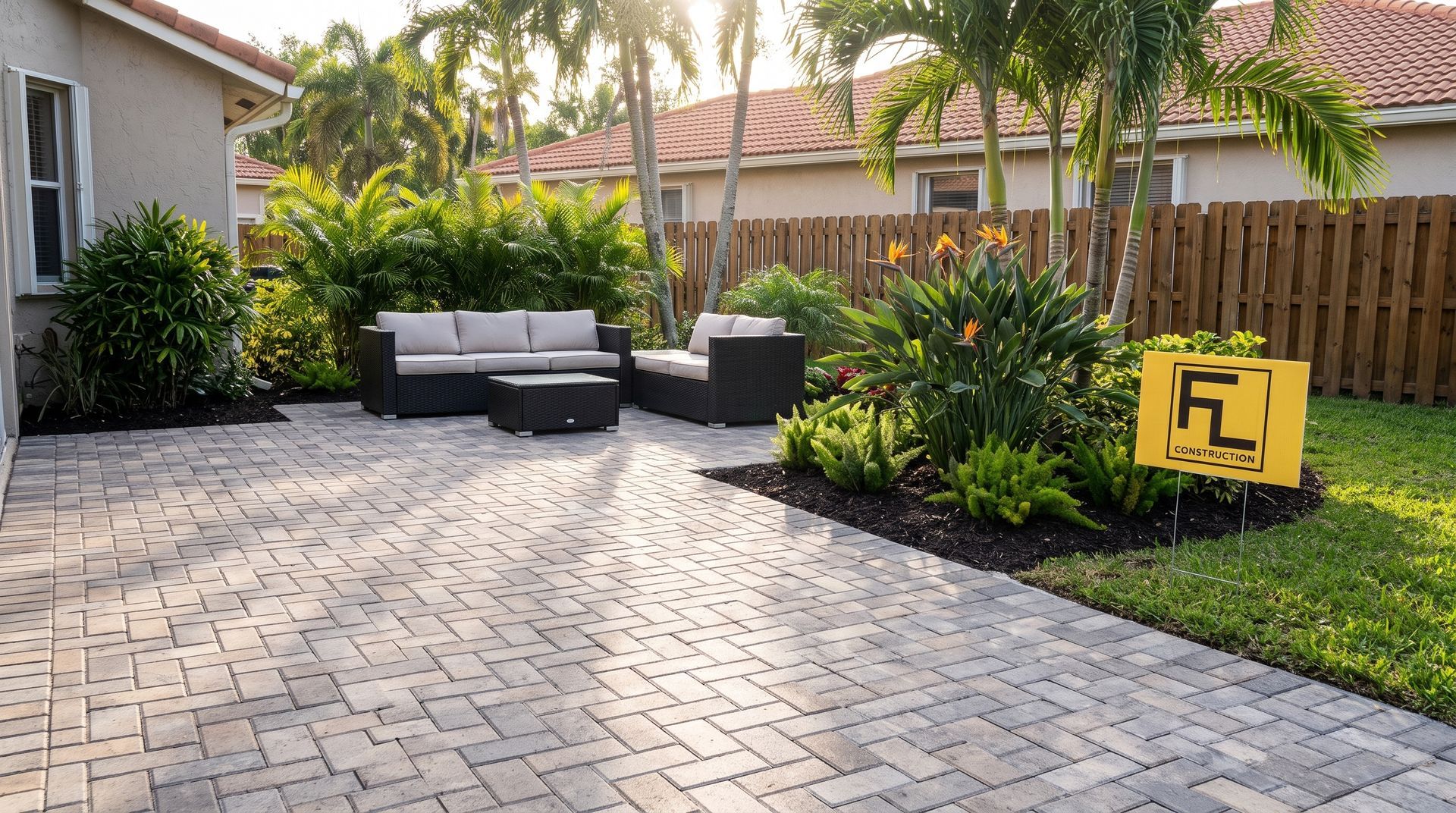
Pavers are individual units, usually concrete, brick, or natural stone such as travertine, set on a compacted base and locked together with joint sand.
How They Are Installed
The area is excavated, a compacted aggregate base is built up, a thin bedding layer is screeded, and the pavers are laid in a pattern. Edge restraints hold the field in place, and joint sand or polymeric sand locks the pavers together.
Why That Matters
Because the surface is made of many small units, it can flex slightly with the ground instead of cracking. If one area settles, those pavers can be lifted, the base corrected, and the same pavers reset.
Travertine
Travertine pavers are a popular natural stone choice in South Florida, especially around pools. They have a classic look, come in light tones, and tend to stay cooler in the sun. Learn more about our
patio options.
What Is a Concrete Patio?
A concrete patio is a slab poured in place over a prepared base, often reinforced and finished in one of several ways.
Common Finishes
- Broom finish: simple, slip resistant, and the most affordable.
- Stamped concrete: pressed with patterns that mimic stone, brick, or tile.
- Exposed aggregate: surface paste removed to reveal decorative stone.
- Stained or colored concrete: color added for a custom look.
- Textured pool deck coatings: cool-touch spray finishes often used around pools.
Control Joints
Concrete shrinks as it cures and moves with temperature and soil. Control joints are cut into the slab so cracks form along planned lines rather than randomly across the surface.
Cost: Upfront and Long Term
Upfront
Plain poured concrete is usually the least expensive option per square foot. Decorative concrete, like stamped or stained finishes, costs more. Pavers generally cost more than plain concrete because of the base preparation, the material, and the labor to set each unit. Natural stone like travertine is typically at the higher end.
Long Term
Over time, the comparison narrows. Concrete cracks are difficult to repair so they blend in, and a badly cracked slab may eventually need to be removed and replaced. Pavers can be repaired in sections using the original pavers, which can extend the life of the patio considerably.
What Drives Your Price
Patio size, site preparation, drainage needs, pattern complexity, borders, and access all affect cost for either material. We provide a written estimate after reviewing your yard, so you can compare both options for your specific space.
Cracking, Settling, and Repairs
This is where the two materials differ most in South Florida.
Why Concrete Cracks Here
South Florida soils are often sandy, and many backyards have fill around the house or old pool excavations that continue to settle. Tree roots, heavy rain, and soil movement can all crack a slab. Hairline cracks are common even on well-built slabs. Patios poured right next to newer homes are especially prone to settling, since the soil along the foundation was backfilled during construction and can keep compacting for years.
How Pavers Handle Movement
Pavers move as individual units. If an area settles, you may see a slight dip, but the surface does not crack apart. The fix is to lift the pavers, correct the base, and reset them.
Repairing Concrete
Cracks can be filled, and damaged sections can be cut out and replaced, but repairs rarely match the surrounding slab in color and texture. Stamped and colored concrete is especially hard to patch invisibly.
Pavers Over Existing Concrete
In some cases, pavers can be installed over a sound existing slab using a specialized method. It depends on the condition of the slab and the height available at doors and pool coping. We evaluate this case by case.
Heat, Sun, and Pool Decks
Comfort Underfoot
Surfaces in direct South Florida sun get hot. Lighter-colored pavers and travertine generally stay cooler than dark pavers or plain gray concrete. Darker stamped colors can get especially hot.
Pool Decks
Around pools, comfort and slip resistance matter most. Travertine and textured pavers offer good grip when wet and tend to stay cooler. Cool-touch coatings are another option for concrete pool decks.
Fading
Sun can fade pavers and colored concrete over time, especially on south- and west-facing patios with no shade. Quality pavers with color throughout the unit and periodic sealing help maintain appearance.
Rain, Drainage, and Storms
Heavy Rain
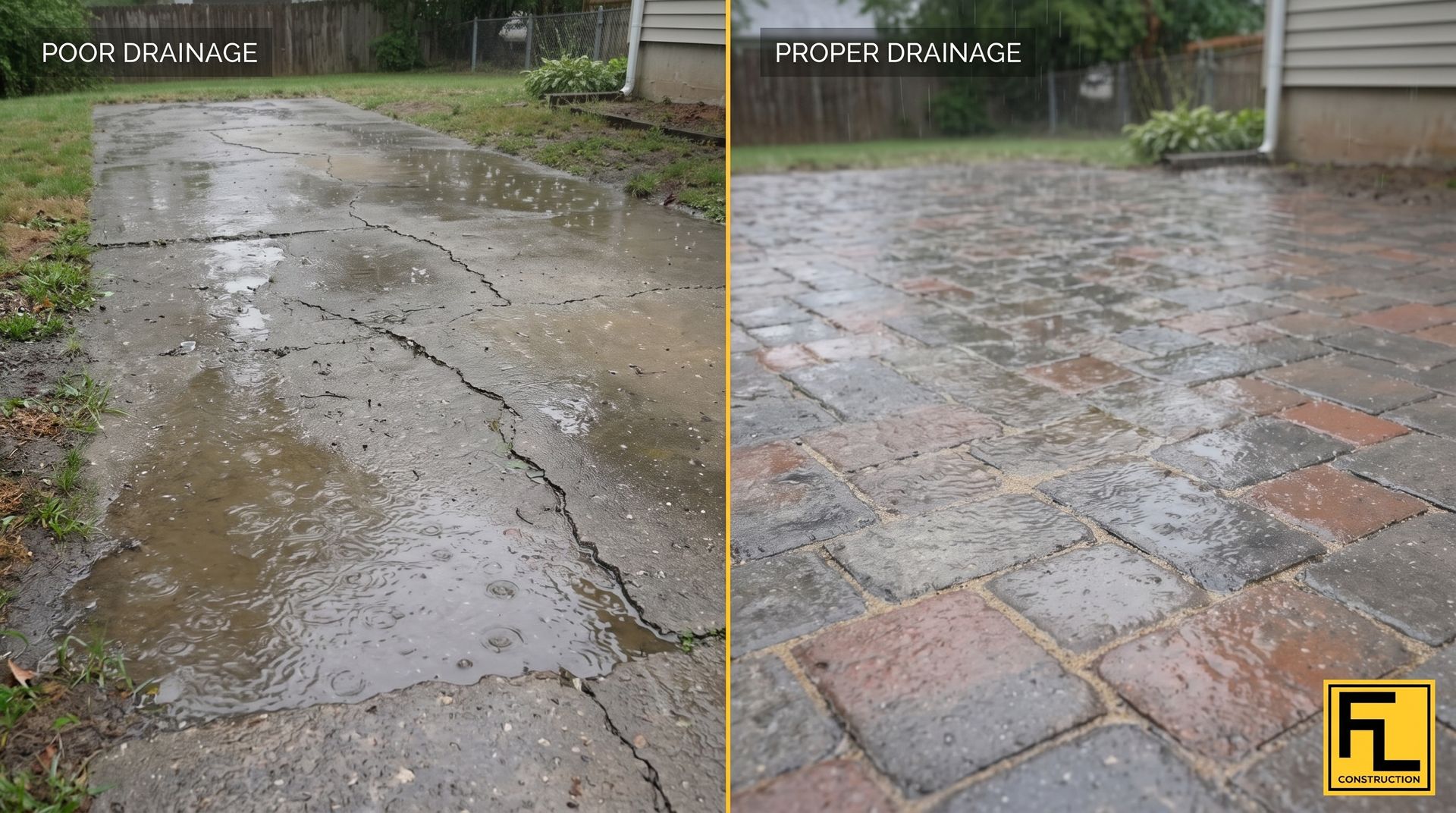
South Florida summer storms bring a lot of water fast. Both patio types need proper slope away from the house. Paver joints let a small amount of water pass through, and permeable paver systems are designed specifically to let water drain into the base.
Concrete Runoff
Concrete is impervious, so all water runs off the surface. Slope and nearby drainage need to be planned carefully, especially on large slabs.
After Storms
After hurricanes or flooding, pavers can be lifted and reset if the base washes out or shifts. Concrete that undermines or cracks from storm damage usually needs sections replaced.
Maintenance in a Humid Climate
Pavers
- Refill joint sand as needed so pavers stay locked together.
- Control weeds and ants in the joints, often by using polymeric sand.
- Clean mildew and algae in shaded areas.
- Reseal periodically to protect color, help stabilize joint sand, and resist stains.
Concrete
- Clean mold and mildew that develop in humid, shaded areas.
- Monitor and seal cracks to keep water out.
- Reseal decorative finishes like stamped concrete to protect color and texture.
Both materials stay looking better with regular cleaning in our humid climate.
Appearance and Home Value
Design Flexibility
Pavers offer the widest range of shapes, colors, patterns, and borders, and they can be combined with travertine, turf, and planting beds. Decorative concrete can mimic stone and tile at a lower cost, while plain concrete is functional but simple.
Matching Your Home
Mediterranean, Spanish-style, and coastal homes common in Boca Raton, Delray Beach, and Wellington often pair well with travertine or tumbled pavers. Contemporary homes may suit large-format pavers or clean, smooth concrete.
Resale
A well-built paver or travertine patio is often seen as a premium feature by buyers. A cracked concrete slab can make a backyard look tired.
Installation Timeline and Disruption
Concrete
A concrete patio is usually formed and poured quickly once the site is prepared. The slab then needs time to cure before heavy use, and furniture should stay off until the contractor says it is ready. Concrete trucks and pump access can be a factor in tight backyards.
Pavers
Paver patios take longer to install because of base preparation and setting each unit, especially with intricate patterns or borders. The upside is that pavers can be used right away once they are installed and the joints are filled.
Planning Around the Weather
South Florida's summer rains can pause either project. Scheduling in the drier months often keeps the work on track.
Common Mistakes With Either Material
Many patio problems come from installation shortcuts rather than the material itself. Watch out for:
- A thin or poorly compacted base, which leads to sinking pavers or cracked concrete.
- No slope away from the house, which sends water toward doors and the foundation.
- Missing edge restraints on paver patios, letting the edges spread.
- Too few control joints in concrete, which leads to random cracking.
- Dark materials around pools that become uncomfortably hot.
- Ignoring downspouts and drainage, which can wash out the base over time.
Asking a contractor how they handle base, slope, and drainage tells you a lot about how long the patio will last.
HOA and Permit Considerations
Many South Florida communities have HOA rules on patio materials, colors, and size, especially in neighborhoods in Boca Raton, Wellington, and Parkland. Some projects, such as large slabs, pool decks, or patios with structures like pergolas, may also require permits depending on the municipality. Check with your HOA and local building department early. We can help prepare the material samples and layout details often needed for approval.
Which One Should You Choose?
Choose Pavers If
You plan to stay in your home for years, want a cooler surface around a pool, want the ability to repair sections easily, or want more design options.
Choose Concrete If
You need the lowest upfront cost, want a simple, functional surface, or are building a utility area like a side yard pad or equipment base.
Consider a Combination
Many backyards combine materials, such as a paver patio with a concrete walkway to the side yard, or pavers bordered by artificial turf. Mixing materials can also help control cost while keeping the most visible areas looking their best. Learn more about our
artificial turf installation and
deck building.
Plan Your New Patio With Florida Construction
If you are deciding between pavers and concrete, our team can visit your home, look at the soil, drainage, and sun exposure, and recommend the right material for your space and budget. Learn more about our patio, walkway, and retaining wall work and our full outdoor and hardscaping services, see finished projects in our gallery, or read homeowner reviews.
Call Florida Construction at (561) 264-5286 or
contact us for a free estimate. We serve homeowners throughout Palm Beach and Broward Counties.
Frequently Asked Questions
Are pavers better than concrete in Florida?
For many South Florida patios and pool decks, yes. Pavers handle soil movement without cracking across the whole surface, can be repaired in sections, and are available in cooler, lighter materials. Concrete is less expensive upfront.
Do pavers crack like concrete?
Individual pavers can chip or crack, but the surface does not crack as one large slab. If pavers shift or settle, they can be lifted and reset on a corrected base.
Which is cooler for a pool deck, pavers or concrete?
Light-colored pavers and travertine generally stay cooler than plain or dark concrete. Cool-touch coatings can also be applied to concrete pool decks.
Can you put pavers over an existing concrete patio?
Sometimes. If the existing slab is sound and there is enough height at doors and pool coping, pavers can be installed over it using a specialized method. A contractor should evaluate the slab first.
How often do pavers need to be sealed in South Florida?
Sealing every few years is common to protect color, help stabilize joint sand, and resist stains. Frequency depends on sun exposure, traffic, and the sealer used.
Recent Posts