
Florida Construction
Storm Damage Roof Inspection: What South Florida Homeowners Should Check After a Storm

After a storm, check your roof for missing or lifted shingles and tiles, debris and puncture damage, damaged flashing, clogged or torn gutters, and any signs of water getting inside like ceiling stains. Do your first checks from the ground and from inside your attic, never by climbing onto a wet or damaged roof, and document everything for your insurance company. If you see damage or suspect a leak, a professional inspection is the safest way to catch what you cannot see from below.
At Florida Construction, we are a licensed and insured South Florida general contractor, and roofing is one of our core services. We inspect and repair storm-damaged roofs across South Florida, where hurricanes, tropical storms, and severe summer weather test every roof. This guide walks you through exactly what to look for after a storm and how to protect your home and your insurance claim.
In This Guide
- What to Do First After a Storm: Safety and documentation.
- How to Check for Roof Storm Damage: What you can inspect yourself.
- Common Types of Storm Damage: The damage South Florida roofs take.
- Why a Professional Inspection Matters: Catching hidden damage.
- Storm Damage and Insurance Claims: Protecting your claim.
- How Soon Should You Act?: Why timing matters.
- Mistakes to Avoid After Storm Damage: What not to do.
- Frequently Asked Questions: Quick answers for homeowners.
What to Do First After a Storm
Once a storm has passed and it is safe to go outside, your first priority is safety, not the roof. Watch for downed power lines, standing water, and unstable debris before you do anything else, and keep clear of any part of the home that looks structurally compromised. If you smell gas, see sagging ceilings, or notice sparking, leave and call the appropriate professionals before returning.
When it is safe, your first roof-related job is to look and document, not to repair. Walk the perimeter of your home and note anything visibly wrong, take clear photos and videos of any damage and debris, and check inside for leaks. This early documentation is important both for planning repairs and for any insurance claim, since it captures the storm's immediate aftermath before anything changes. It also helps to note the date and time and, if you can, keep any news or weather records of the storm, since tying the damage to a specific weather event strengthens both your understanding of what happened and any claim you file later.
How to Check for Roof Storm Damage
You can learn a lot about your roof's condition without ever leaving the ground, and that is exactly where your inspection should stay. A wet, damaged roof is dangerous to walk on, and climbing up yourself risks both injury and further damage, so leave the on-roof inspection to a professional.
Here is what you can safely check yourself:
- From the ground, look for missing, cracked, or lifted shingles and tiles, and for pieces of roofing material in your yard.
- Scan for debris on the roof, such as fallen branches, that could have punctured the surface.
- Check the gutters and downspouts for damage, sagging, or granules that have washed off the shingles.
- Look at the flashing around chimneys, vents, and skylights for anything bent, lifted, or missing.
- Inspect your ceilings and attic for water stains, drips, damp insulation, or daylight coming through the roof deck.
If you have binoculars, use them to get a closer look from the ground. Note anything you find with photos, and treat any interior water sign as a reason to call for a professional inspection right away. Pay attention to less obvious spots too, such as the roof over a porch or lanai, valleys where two slopes meet, and the areas around skylights and solar panels, since these transitions are where wind-driven rain most often finds a way in.
Common Types of Storm Damage
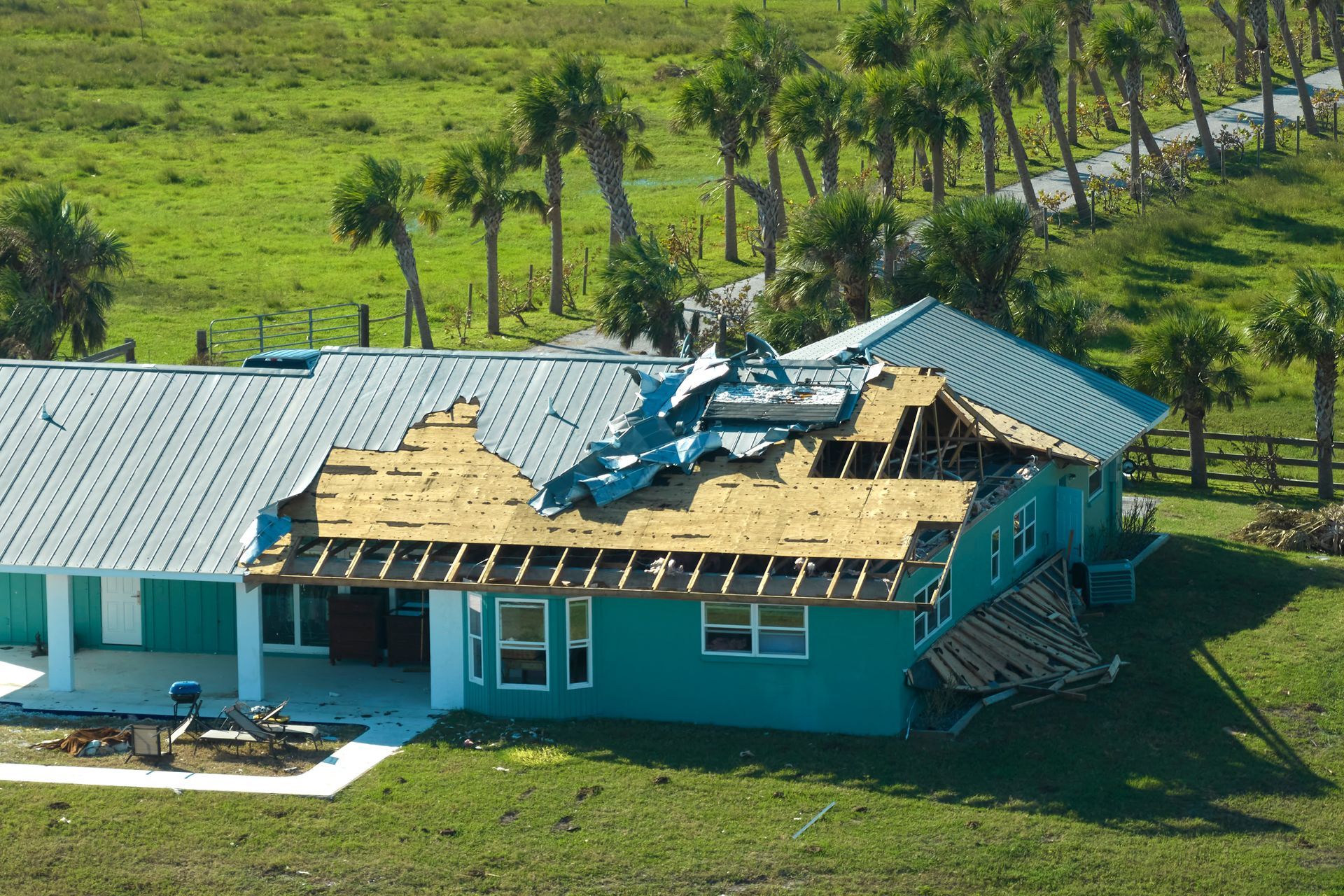
South Florida roofs take specific kinds of damage in our storms, driven by high winds, wind-driven rain, and flying debris. Knowing what each looks like helps you spot it and describe it accurately.
| Damage Type | What to Look For | Why It Matters |
|---|---|---|
| Wind damage | Missing, lifted, or curled shingles and tiles | Exposes the underlayment and deck to water |
| Debris and puncture | Holes, cracks, or dents from branches and objects | Creates direct openings for leaks |
| Flashing damage | Bent, lifted, or missing metal at joints | Lets water in at chimneys, vents, and valleys |
| Water intrusion | Ceiling stains, attic leaks, damp insulation | Signals water is already inside the home |
Wind is the most common culprit, lifting or tearing away shingles and tiles and loosening the flashing that seals the roof's vulnerable joints. Wind-driven rain then finds any opening those failures create, which is why a roof can look mostly intact from the ground and still be leaking. Debris punctures are the most obvious damage, but the small, subtle failures at the edges and seams are often what cause the leaks you discover later. Hail is less common in South Florida than in some regions, but when it does fall it can bruise shingles and crack tiles in ways that are hard to see from the ground yet still shorten the roof's life.
Why a Professional Inspection Matters
A ground-level check tells you whether you have obvious damage, but it cannot tell you the full story. Much storm damage is not visible from below, including lifted shingles that have resettled, hairline cracks in tiles, compromised underlayment, and early water intrusion in the decking. A professional roofer inspects the roof surface safely and up close, catching the damage that leads to leaks weeks or months down the road.
A professional inspection also produces the thorough documentation that matters for repairs and insurance. In South Florida, roofs are also built to strict High Velocity Hurricane Zone standards, and a qualified contractor understands what a compliant, watertight repair requires. If your ground check turned up anything, or if the storm was severe, a professional inspection is the reliable way to know where you truly stand. A trained roofer also knows the subtle signs that a homeowner would miss, such as bruising on shingles from hail, fasteners that have backed out, or granule loss concentrated in one area, all of which point to damage that will shorten the roof's life even if it is not leaking yet.
Storm Damage and Insurance Claims
If your roof has storm damage, your homeowner's insurance may cover the repair or replacement, which makes good documentation essential. The stronger your record of the damage and its cause, the smoother the claims process tends to be.
A few practices help protect your claim. Document everything with dated photos and videos as soon as it is safe, keep records of any temporary repairs and their costs, and avoid making permanent repairs before your insurer has assessed the damage. A professional roof inspection report adds credibility, clearly tying the damage to the storm. Reputable roofers work with this process regularly and can document their findings in a way that supports your claim, so involving one early is often worthwhile. It also helps to review your policy so you understand your deductible and what is covered before you file, since storm and hurricane deductibles in Florida can work differently from a standard claim.
How Soon Should You Act?
Storm roof damage is not something to put off. Every rain that follows the storm drives more water through any opening, turning a small, insurable repair into widespread interior damage. Acting quickly limits the harm and keeps your options open.
If you have an active leak or exposed roofing, a professional can install a temporary tarp or covering to protect the home until a permanent repair is made. Do not attempt this on a damaged roof yourself, since the risk of a fall is real. The goal right after a storm is to stop further water intrusion and get a proper assessment quickly, before the next round of weather adds to the damage.
Mistakes to Avoid After Storm Damage
In the stress after a storm, a few common mistakes can cost homeowners money or make the damage worse. Steering clear of them protects both your home and your insurance claim.
- Climbing onto a damaged roof yourself, which risks a serious fall and can cause further damage to an already compromised surface.
- Ignoring minor-looking damage, since a few lifted shingles or a small puncture can leak and rot the deck over the following weeks.
- Making permanent repairs before your insurer assesses the damage, which can complicate or reduce your claim.
- Hiring the first door-knocking contractor who appears after a storm without checking that they are licensed and insured in Florida.
- Waiting too long to act, letting each rain drive more water into the home and turning a small repair into a major one.
The safest path after a storm is to document, protect the home from further water intrusion, and bring in a licensed professional for the actual inspection and repair. A steady, careful approach almost always costs less than a rushed one.
Get a Storm Damage Roof Inspection From Florida Construction
After a South Florida storm, the safest way to know your roof's true condition is a professional inspection that catches the damage you cannot see from the ground. Our team assesses the roof, documents everything, and helps you take the right next step, whether that is a repair or an insurance claim.
Call Florida Construction at [CLIENT PHONE] or
contact us to schedule a storm damage roof inspection anywhere in South Florida. Acting quickly after a storm is the best way to protect both your home and your insurance claim. If you are also wondering how much life your roof has left, see our guide on
how long a roof lasts in Florida.
Frequently Asked Questions
How do I know if my roof has storm damage?
Look from the ground for missing, lifted, or cracked shingles and tiles, roofing material in your yard, damaged flashing, and dented or sagging gutters, and check your ceilings and attic for water stains or leaks. Some storm damage is not visible from below, so if you see any of these signs or the storm was severe, a professional inspection is the reliable way to confirm the roof's condition.
Should I get my roof inspected after every storm?
It is wise to check your roof after any major storm, especially a hurricane, tropical storm, or severe wind event. You can do a ground-level and attic check yourself, and you should schedule a professional inspection if you find any signs of damage or a leak. Catching damage early prevents small storm-related problems from turning into major water damage.
Can I inspect my roof myself after a storm?
You can and should do a visual inspection from the ground and from inside your attic, but you should not climb onto the roof. A storm-damaged roof is unstable and often wet, so getting on it risks a serious fall and can cause more damage. Leave the close-up, on-roof inspection to a professional with the right equipment and training.
Will insurance cover storm damage to my roof?
Homeowner's insurance often covers roof damage caused by a storm, though coverage depends on your policy. Strong documentation is key, so photograph the damage as soon as it is safe, keep records, and avoid permanent repairs before your insurer assesses it. A professional inspection report that ties the damage to the storm can help support your claim.
How quickly should I repair storm damage?
As soon as possible. Each rain after the storm pushes more water through any opening, so a small, repairable problem can quickly become extensive interior damage. If there is an active leak or exposed roofing, a professional can install a temporary covering to protect your home until a permanent repair is completed, which also helps limit the damage for your claim.
Recent Posts